

The Hidden Dangers of Sharing Bathroom Essentials
A leading medical expert has revealed three bathroom items you should never share with anyone – and the reasons why might surprise you. Professor Thea van de Mortel from Griffith University in Australia recently published a report warning against the shared use of towels, toothbrushes, and razors under any circumstances.
A medical expert has identified three bathroom items that should never be shared with others.
Professor van de Mortel highlighted that while these items are typically considered personal, they’re often shared in unexpected situations like war zones, disaster areas, or during travel. She also noted that couples frequently share toothbrushes, a habit that carries more risks than you might think.

Health experts warn: Keep your towels, toothbrushes, and razors to yourself.
Professor van de Mortel explained that a 2007 report from U.S. health authorities revealed a shocking statistic: high school football players who shared towels were eight times more likely to contract antibiotic-resistant Staphylococcus aureus. It’s a stark reminder of the hidden dangers in everyday items.
Another eye-opening study followed a family with a child infected with Staphylococcus aureus for a year. The results showed that family members who shared the child’s towel faced a significantly higher risk of infection. This highlights that it’s not just about hygiene—it’s about protecting your loved ones.
The professor explained that washing with soap and water reduces microorganisms on the skin, but it doesn’t eliminate them completely. He added that the warm, humid environment of a bathroom is like a five-star hotel for these tiny troublemakers. Even without visible signs of infection, harmful colonies can form on your skin, leading to a host of problems.
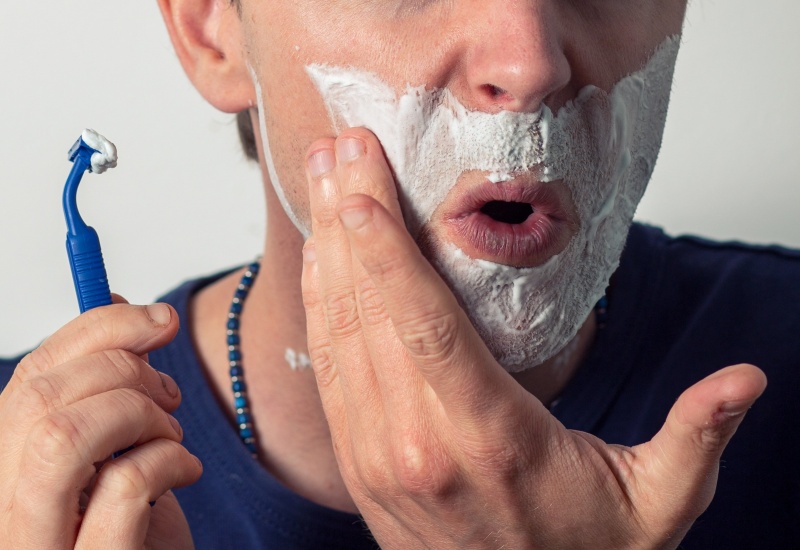
Sharing razors: A risky business that can transmit bloodborne viruses.
But that’s not all. Your seemingly innocent toothbrush could be harboring some nasty secrets. Occasional gum bleeding makes it a potential carrier of bloodborne viruses such as Hepatitis C. And let’s not forget about those pesky saliva-spread viruses like herpes simplex virus type 1 (HSV-1) and the Epstein-Barr virus. Here’s a scary thought: HSV-1 can be spread by people with no symptoms, and it can survive on your toothbrush for up to six days!
Razors aren’t off the hook either. Those tiny nicks and cuts are perfect entry points for bloodborne viruses. The professor warned that other personal hygiene items can spread human papillomavirus (HPV), which causes warts. She emphasized that this is especially dangerous for people with weaker immune systems, including babies, the elderly, those undergoing chemotherapy or taking immunosuppressants, and patients with type 2 diabetes, who need to be extra careful.
The bottom line, according to the professor, is that even sharing once is a risk, but daily sharing with family or roommates is like playing with fire. She insisted that it’s time to break the habit, explaining that using someone else’s bathroom items isn’t just unpleasant—it’s potentially dangerous.

